There are 22 Tanzania National Parks, covering about 15% of the country’s land. Managed by the Tanzania National Park Authority (TANAPA), these parks protect breathtaking landscapes and incredible wildlife. From vast savannas to misty mountains, each place has its character. The game viewing here is among the finest in Africa, with scenes straight out of a wildlife documentary.
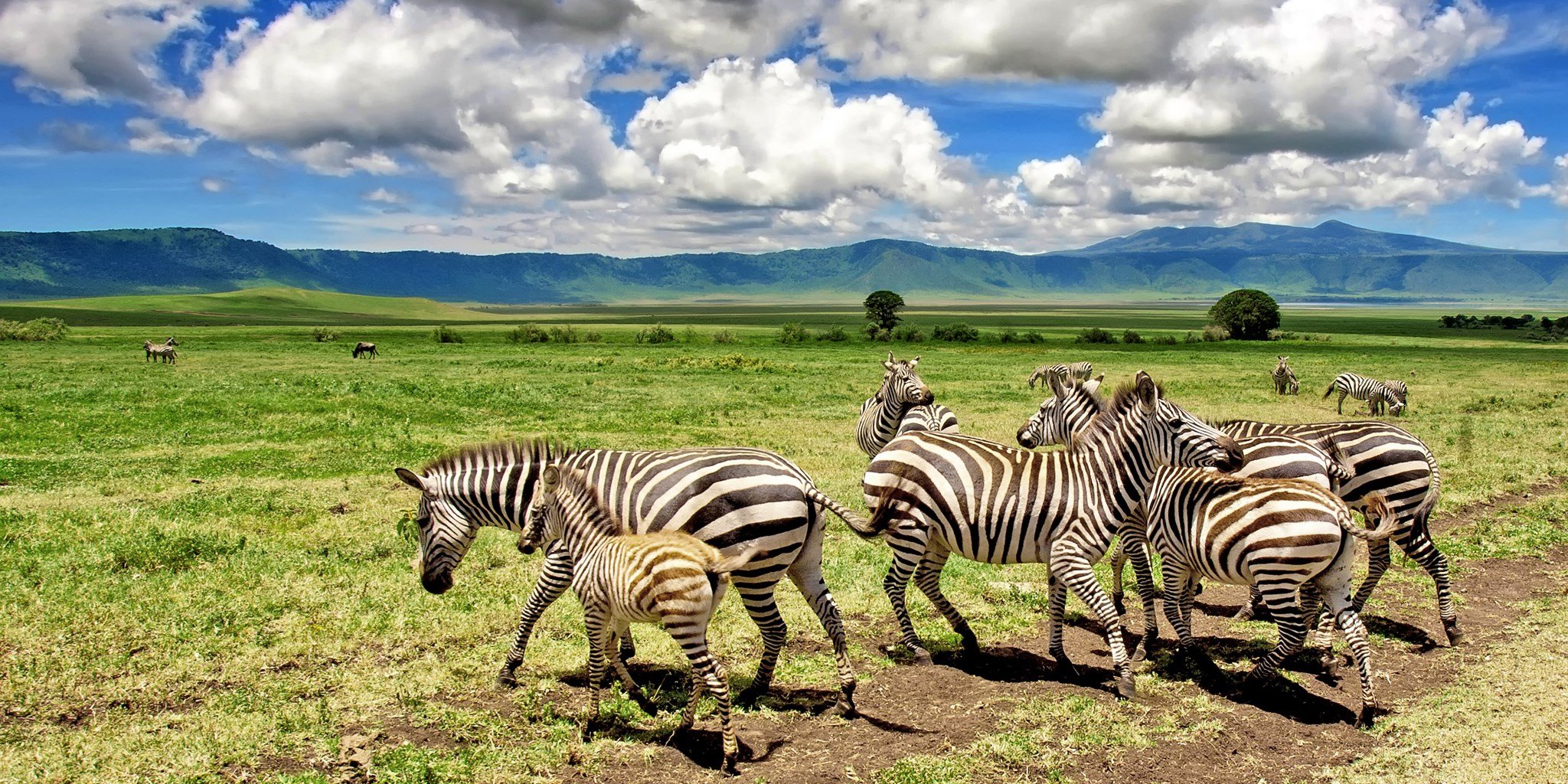
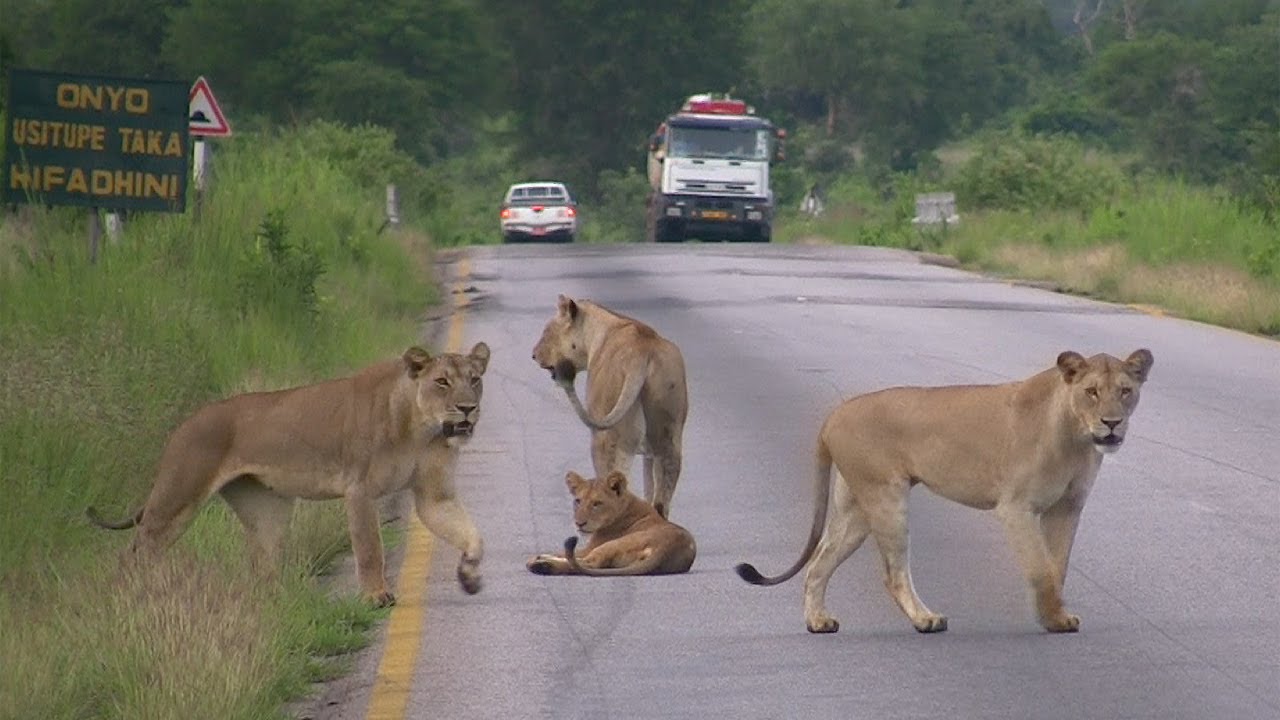
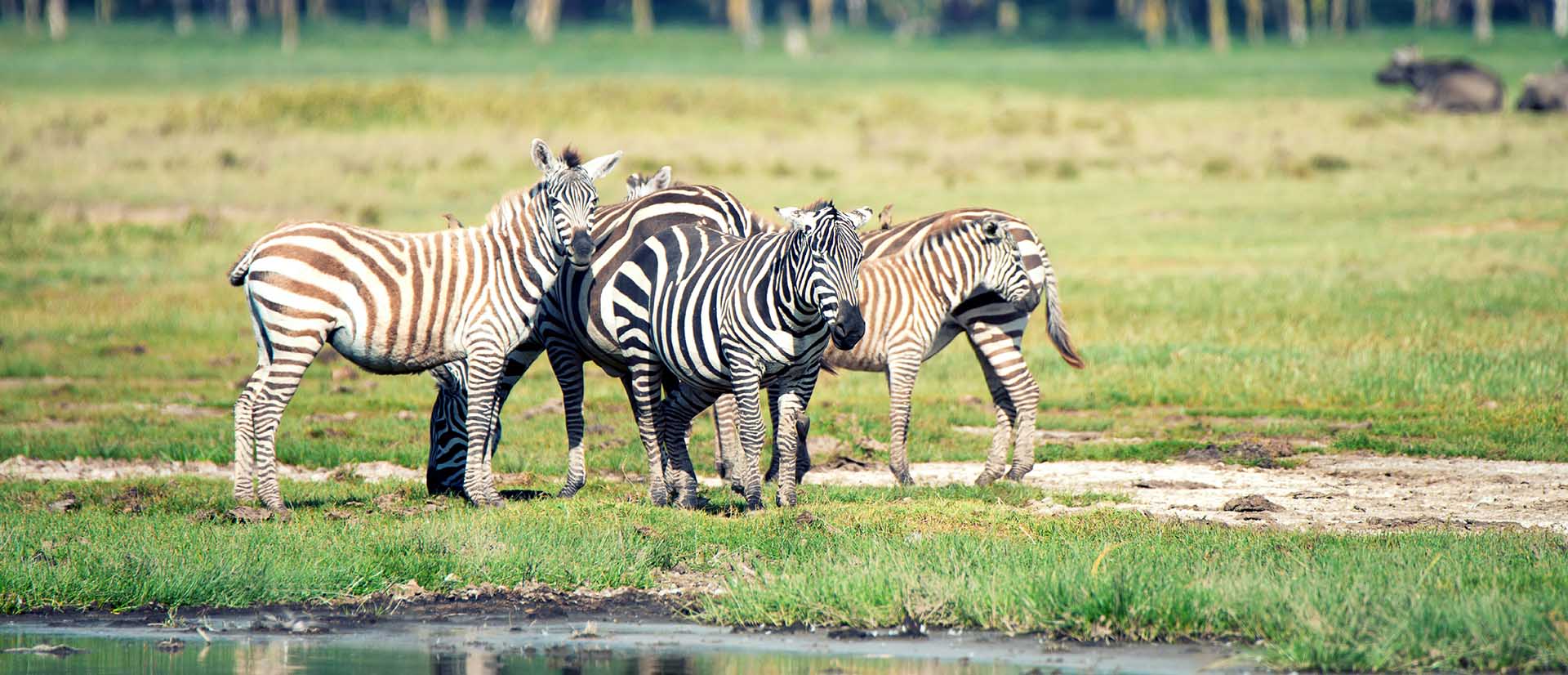
The Serengeti National Park is situated in the Mara Region and it is Tanzania’s oldest national park. It is famous for its annual migration of over 1.5 million white bearded or brindled wildebeests and over 250,000 zebras and for its numerous crocodiles. It is also known for its wealth in other resident wildlife particularly ‘the Big Five’. Serengeti is believed to hold the largest population of Lions in Africa due to the abundance of prey species. Leopards are commonly seen in the Seronera region but are present throughout the park. The African elephant are recovering from population lows due to poaching in the 1980’s and are largely found in the northern regions of the park. Black Rhinoceros are mainly found around the kopjes in the center of the park. African Buffaloes are still in abundance.
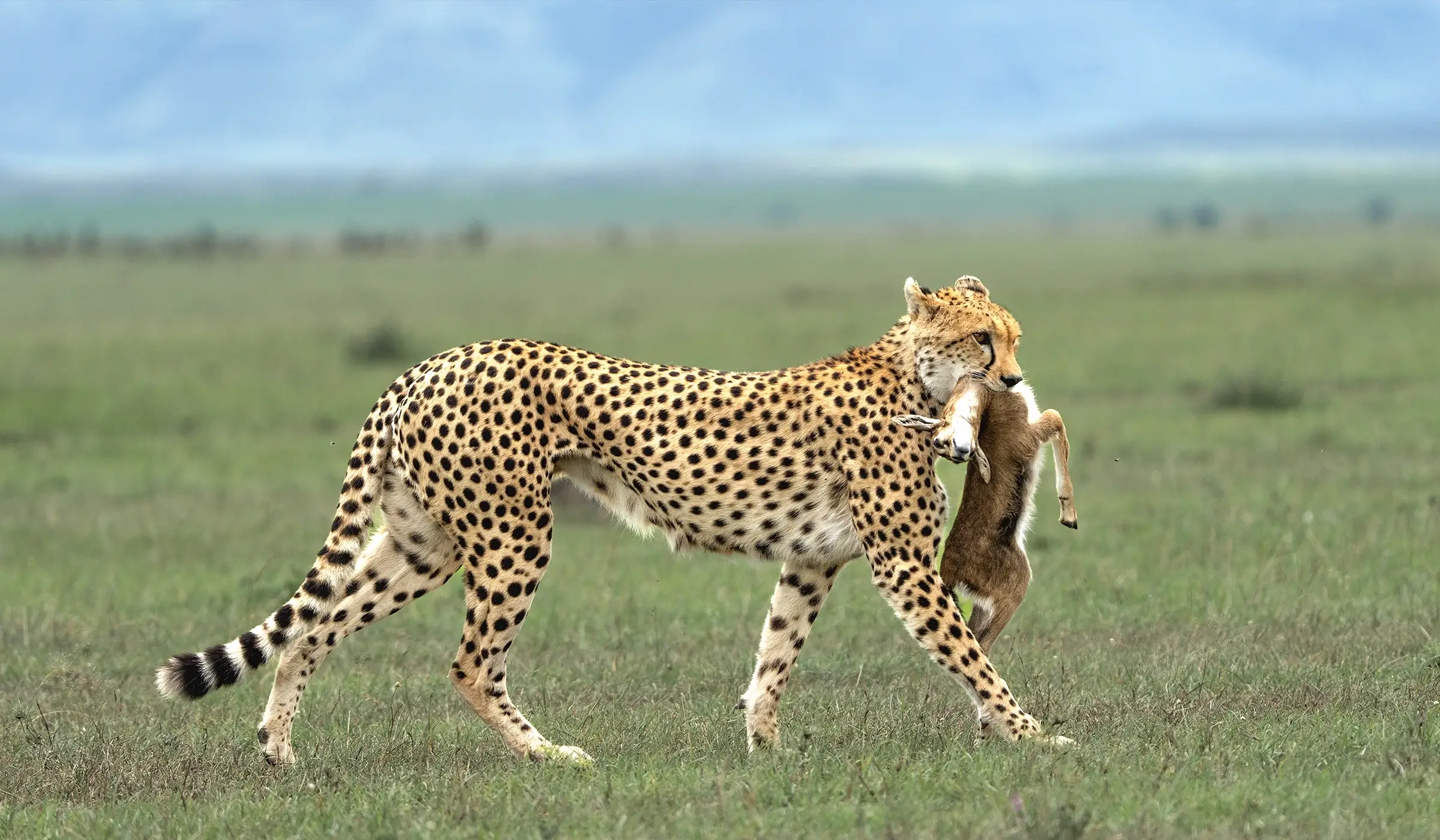
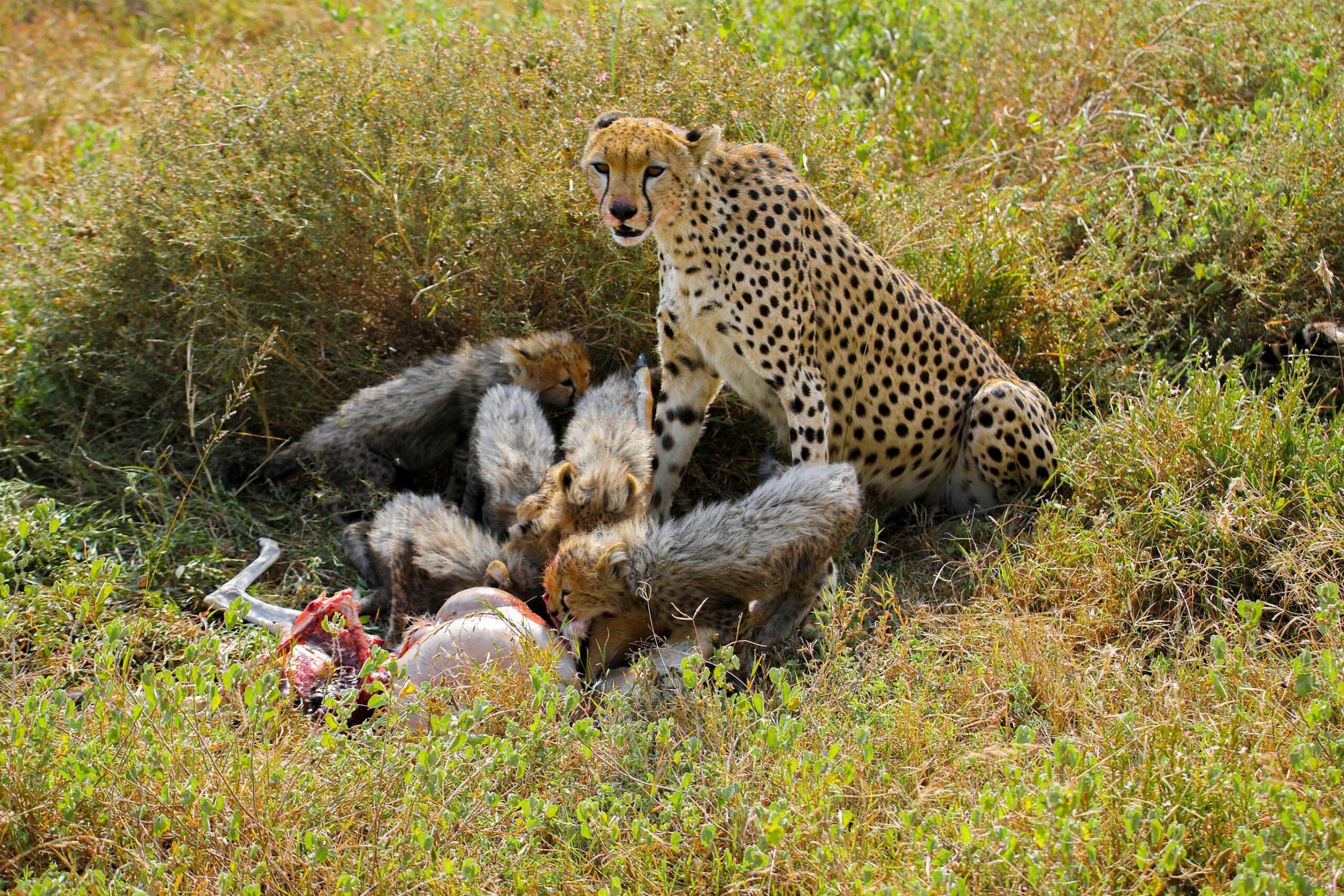
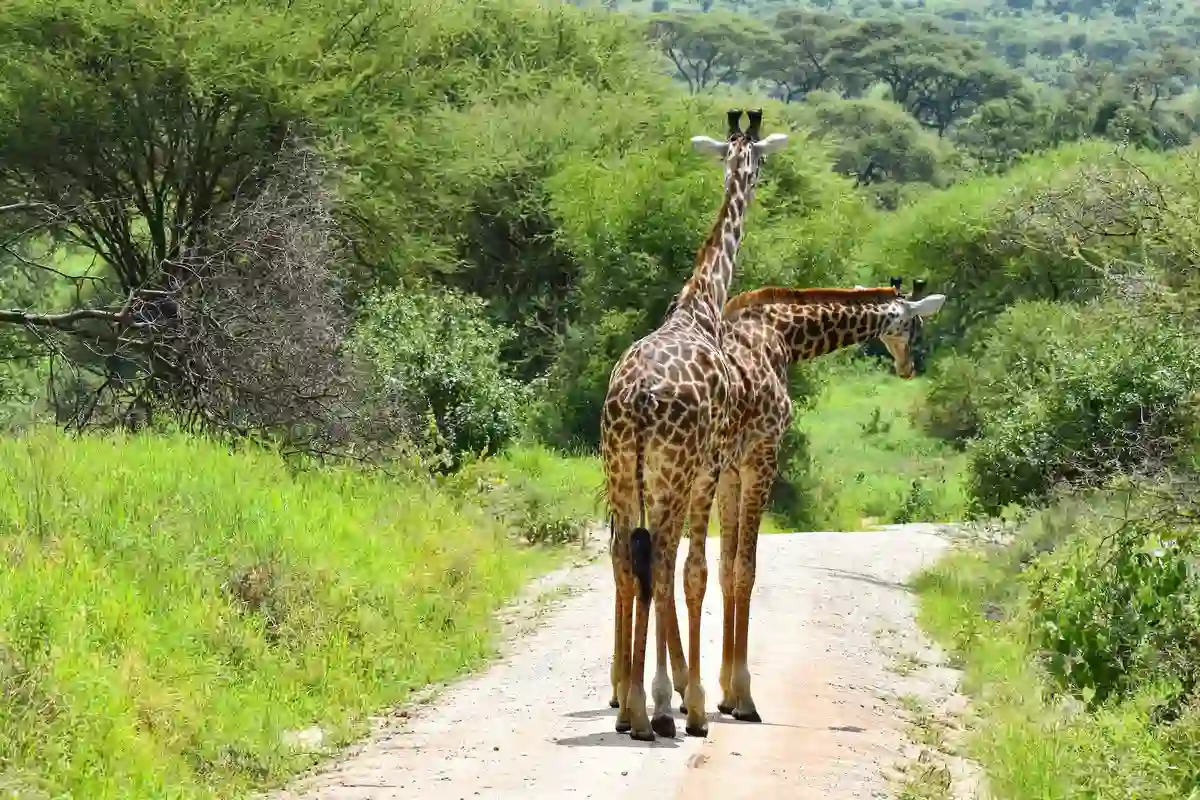
The park also boasts of other species including cheetah, gazelles, topi, hyena, impala, eland, African wild dog, waterbuck, baboons, and giraffes. It is also home for about 500 bird species including ostrich, kori bustard, crowned crane, secretary bird, lovebirds, marabou stork, martifal eagle and many other vulture species.
NGORONGORO CONSERVATION
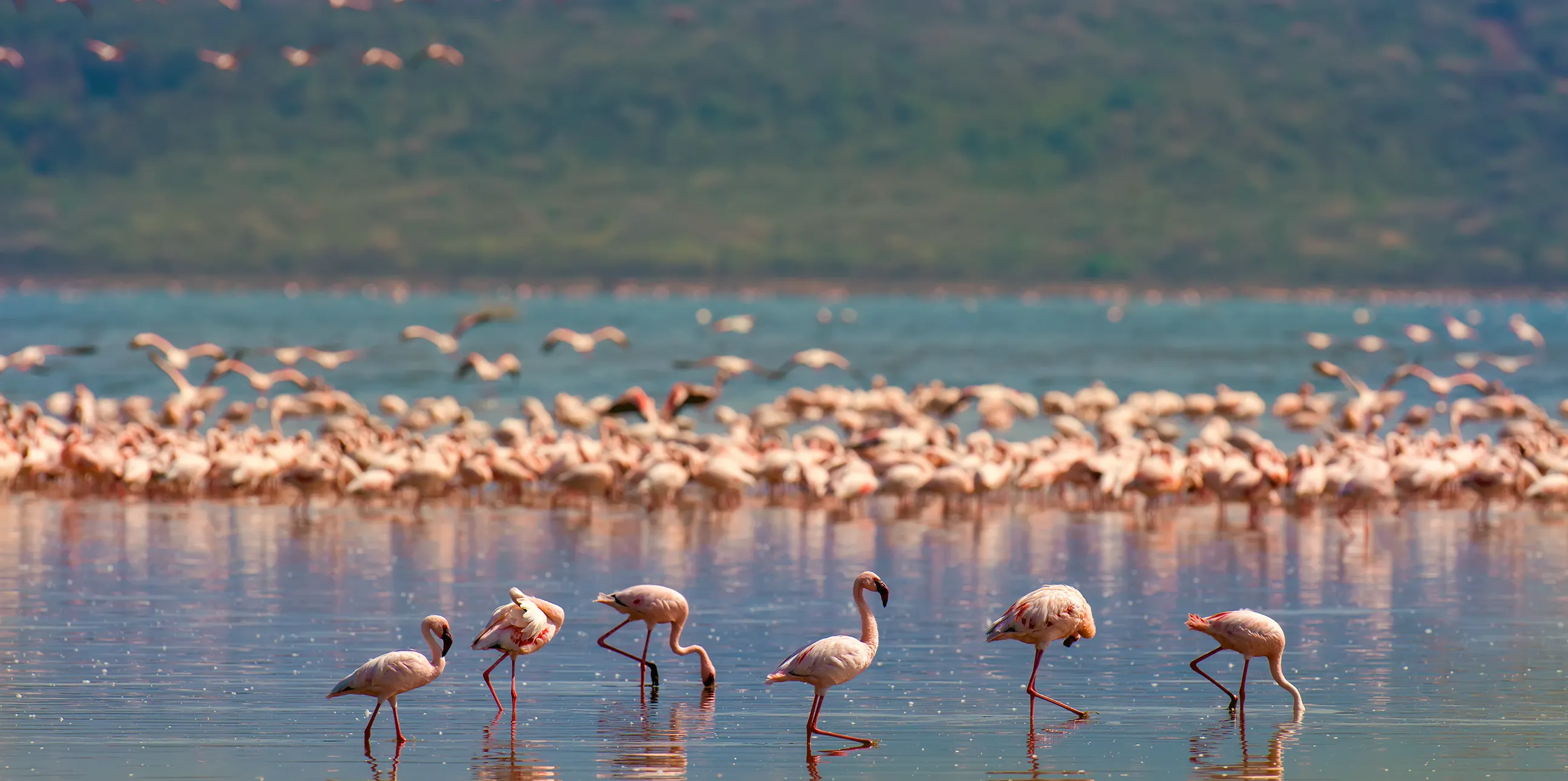
The crater has one of the densest known populations of lions. On the crater rim are leopards, elephants, mountain reedbuck and buffaloes. The rhinoceros are also found at the crater. From a distance in the large lake in the middle of the crater hundreds of flamingoes form a pink like border to the lake. Animals in the crater include most of the species found in East Africa but there are no topis, giraffes, impalas, oribis or crocodiles.
The other major source of water in the crater is Ngoitokitok Spring near the eastern crater wall. There is a picnic site here open to tourists and huge swamp fed by the spring and the area is inhibited by hippopotamus, elephants, lions and many others. Many other small springs can be found around the crater’s floor and they are important water supplies for the animals and local Maasai people.
LAKE MANYARA
Lake Manyara is part of the northern circuit of national parks in Tanzania. A popular route is to start in Arusha and visit Lake Manyara before continuing to Serengeti National Park, Ngorongoro Conservation Area, and finishing your adventure at Arusha. These attractions can be combined as part of a 5-6 day itinerary.
Although Lake Manyara National Park does not contain as much wildlife as its bigger sisters, the Ngorongoro Crater and the Serengeti, scientists believed that Lake Manyara contained one of the highest concentrations of wildlife in Africa during the 1980s.
Tarangire National Park
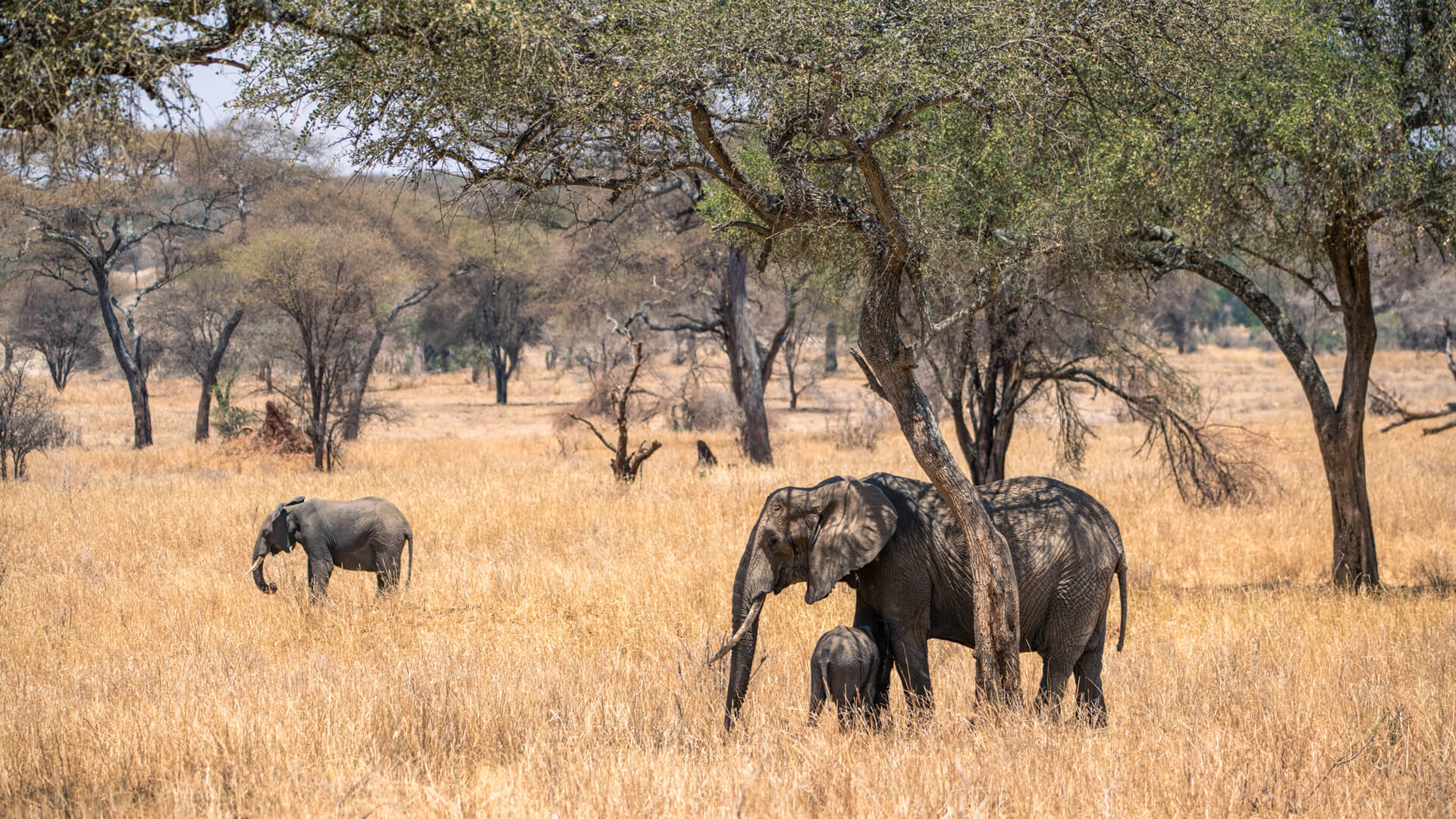
Tarangire National Park is in northern Tanzania, just south of Lake Manyara. This is a protected area of colossal baobabs, grassy plains and huge herds of elephant. The park is one of the most underrated of Tanzania’s attractions, receiving just a fraction of the Serengeti’s visitors, which means more space and exclusivity for those who do make it to Tarangire.
As well as 300-strong herds of elephant, visitors will find big groups of buffalo and healthy populations of lion and leopard. During the dry season, Tarangire has the highest concentration of mammals in the country. There are wild dog and rare antelope such as gerenuk, plus more than 550 species of birds to spot throughout the year.
Tarangire is the ideal park for those who want to explore beyond game drives. Walk through the savannah to study the smallest creatures and learn about tracking animals. Soar through the sky in a hot-air balloon at dawn or head out on a night drive to find nocturnal wildlife.
Ruaha National Park
Ruaha is an astonishing park which offers a fascinating variety of landscapes and un touched nature. Ruaha, at 10,300sq km, is a naturalist’s paradise which provides even the most experienced travelers with something new. The undulating topography, glorious river and majestic trees combine to produce one of Africa’s most captivating landscapes. Situated in central Tanzania, the Ruaha National Park is the second biggest park in Tanzania.
Ruaha National Park forms the core of a wild and extended ecosystem covering about 40,000 sq km and provides home to Tanzania’s largest elephant population. In addition to the elephants, which are estimated to number about 12,000, Tanzania’s largest national park hosts large herds of buffaloes, greater and lesser kudus, Grant’s gazelles, wild dogs, ostriches, cheetahs, roan and sable antelopes, and more than 400 different types of birds.
Ruaha is notable for its wild and striking topography, especially around the Great Ruaha River, which is its heart. Much of this topography is undulating plateau averaging about 900m in height with occasional rocky outcrops and stands of baobabs. Mountains in the south and west reach to about 1600m and 1900m, respectively. Running through the park are several ‘sand’ rivers, most of which dry up during the dry season, when they are used by wildlife as corridors to reach areas where water remains.
Udzungwa Mountain National Park
Udzungwa Mountains National Park was established in 1992 and officially opened by the former President and founder of WWF (World Wildlife Fund for Nature) Prince Bernhard of the Netherlands. The word "Udzungwa" comes from the word "Wadsungwa" referring to one of the native sub tribes of the "Hehe" people who once lived in the slopes of the mountains.
The park covers an area of 1990km2 where geographically, 20% of the total area lies in Morogoro region while the remaining 80% being in the southern highland region of Iringa.
Kitulo National Park
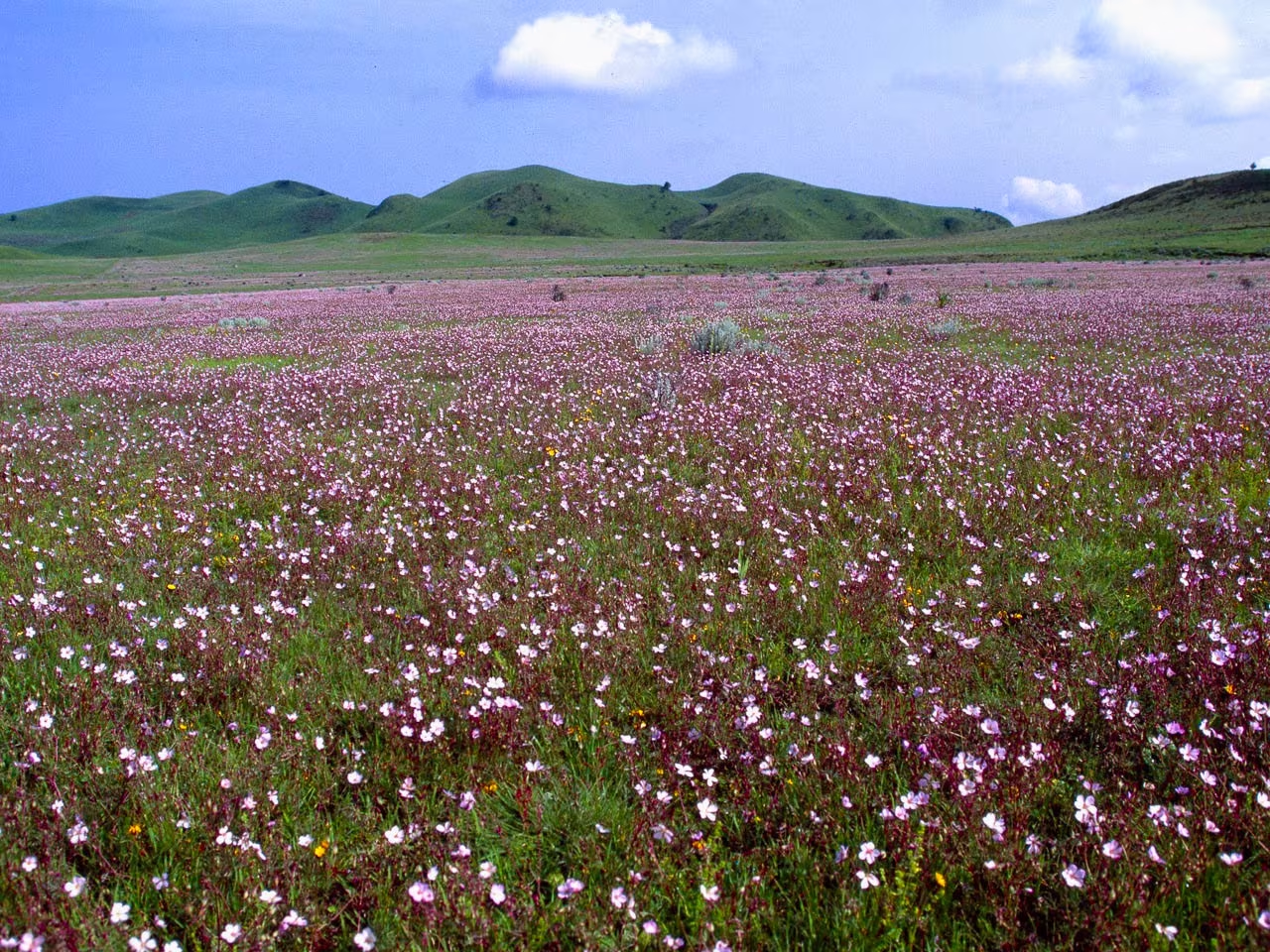
Kitulo National Park is at an elevation of 2,600 metres between the peaks of the Kipengere and Poroto mountains and covers an area of 412.9 square kilometres, lying in Mbeya Region and Njombe Region. The park was formally established in 2005 becoming Tanzania's fourteenth national park. Kitulo National Park referred by locals as “The Garden of God”. Kitulo National Park is a protected area of montane grassland on the Kitulo Plateau in the southern highlands of Tanzania. But Kitulo – a botanist and hiker’s paradise - is also highly alluring to birdwatchers. Tanzania’s only population of the rare Denham’s bustard is resident, alongside a breeding colony of the endangered blue swallow and such range-restricted species as mountain marsh widow, Njombe cisticola and Kipengere seedeater. Endemic species of butterfly, chameleon, lizard and frog further enhance the biological wealth of God’s Garden.
Saadani National Park
Located only 130 km north of Dar es salaam and directly to the west of Zanzibar Island, Saadani is the only coastal wildlife sanctuary in East Africa, which not only means relaxing on Indian Ocean beaches after each safari, but provides the opportunity to observe Africa’s big game and birdlife interacting with the sea.
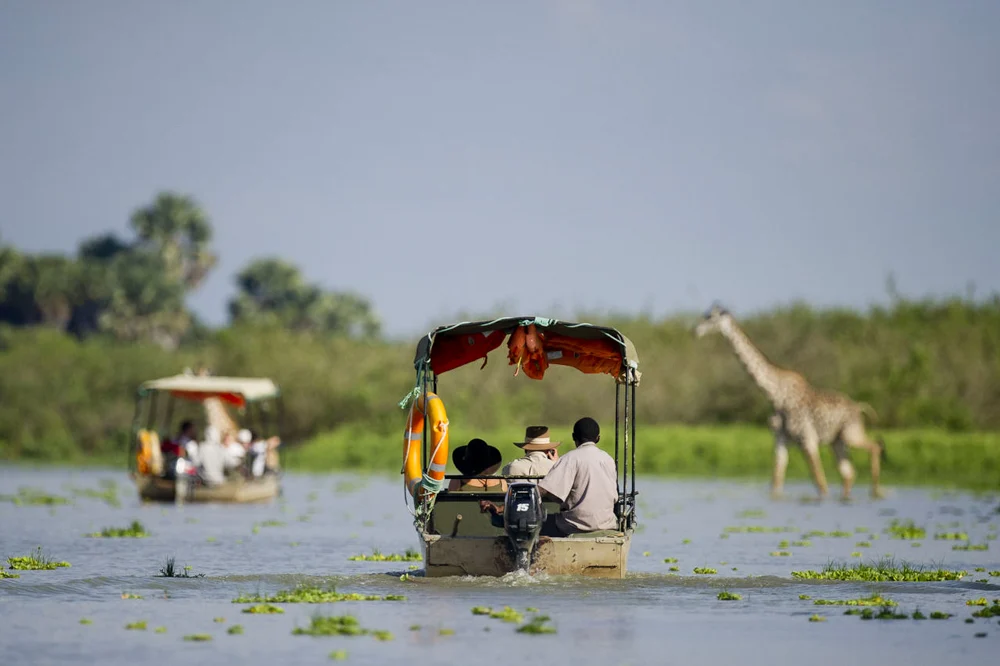
Gazetted a National Park in 2002, Saadani measuring about 1100 sq. km in size, has a diverse population of mammals and birds. Elephant, leopard, lion, buffalo, giraffe, wildebeest, zebra, colobus monkey, hippo, crocodile and the rare Roosevelt sable can be seen here. Saadani offers a choice of a driving safari, nature walk, and boat safari on the Wami River.
Arusha National Park
The Arusha national park covers Mt. Meru, a prominent volcano with an elevation of 4566m in the Arusha region of north eastern Tanzania. The park is small but has spectacular landscapes in three distinct areas. In the west, the Meru Crater funnels the Jekukumia River, the peak of Mt Meru lies on its rim. Ngurdoto in the south-east is grassland. Momella lakes in the north-east have varying algal colours and are known for their wading birds.
Mt. Meru is the second highest peak in Tanzania after Mt. Kilimanjaro. It forms a backdrop to views from the park to the east. Arusha National Park lies on a 300km axis of Africa’s famous national parks, running from Serengeti and Ngorongoro crater.
Kilimanjaro National Park
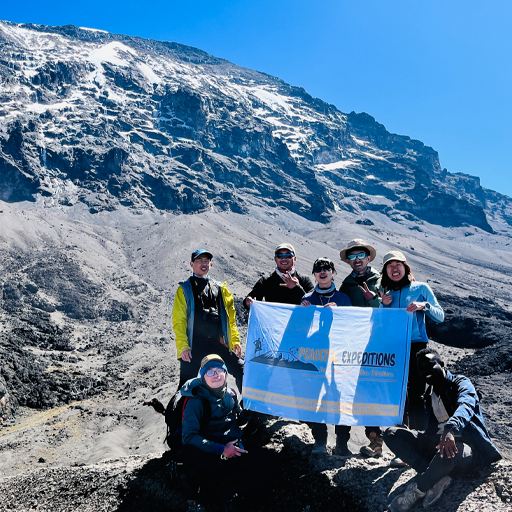
Snow-capped Mount Kilimanjaro is the highest point on the African continent, the world’s largest free-standing mountain and one of the largest volcanoes. At 5895m, the views from Uhuru Peak are spectacular. There’s no special equipment or expertise required to ascend Mt. Kili, however it is challenging and a good level of fitness is required. There are several routes to the summit (varying in difficulty). The Marangu Route is the most frequented on Mt Kili, taking 5-6 days, with accommodation in huts, whilst the Machame Route, requires 6-7 days, involves camping and is tougher, with steeper trails and longer distances covered.
Mikumi National Park
Mikumi is Tanzania’s fourth-largest national park, and the most accessible from Dar es Salaam. With almost guaranteed year-round wildlife sightings, Mikumi makes an ideal safari destination for those without much time. Within its 3230 sq km – set between the Uluguru Mountains to the northeast, the Rubeho Mountains to the northwest and the Lumango Mountains to the southeast – Mikumi hosts buffaloes, wildebeests, giraffes, elephants, lions, zebras, leopards, crocodiles and more, and chances are high that you’ll see a respectable sampling of these within a short time of entering the park.
The most reliable wildlife watching is around the Mkata floodplain, to the northwest of the main road, with the open vistas of the small but lovely Millennium (‘Little Serengeti’) area a highlight. This area is especially good for spotting buffaloes – often quite near the roadside – as well as giraffes, elephants and zebras. Another attraction: the Hippo Pools, just northwest of the main entry gate, where you can watch hippos wallowing and snorting at close range, plus do some fine birding.
Selous Game Reserve
Selous Game Reserve (GR) aka the Nyerere National Park is a 21,081 sq. mile park in southern Tanzania, the largest national park in the country. The park is home to one of the world’s largest wildlife sanctuaries.
Safaris at Selous Game Reserve are renowned for their picturesque and pristine setting and the reserve itself was designated a UNESCO World Heritage Site in 1982 as a protected nature reserve.
Mahale National Park
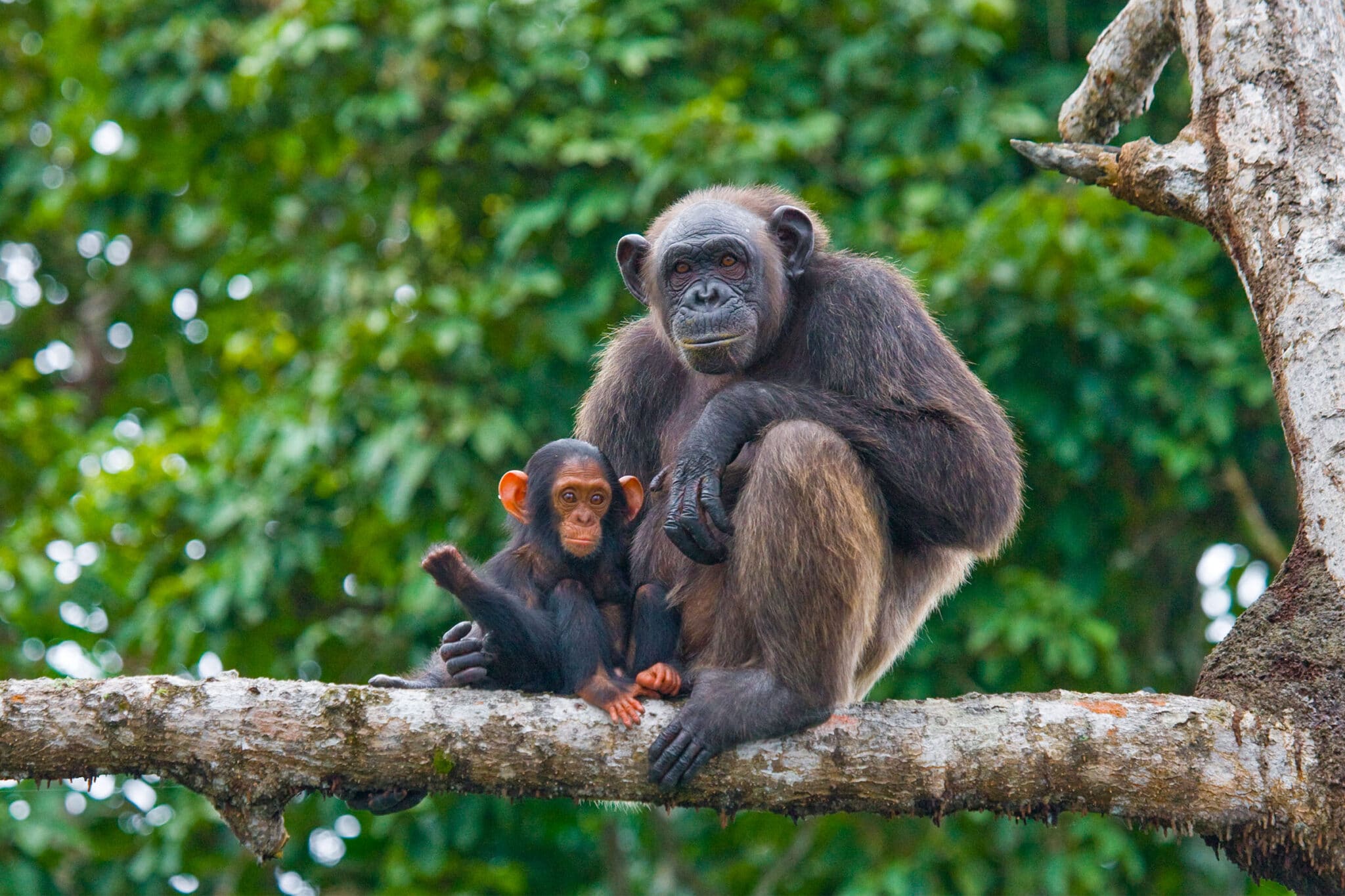
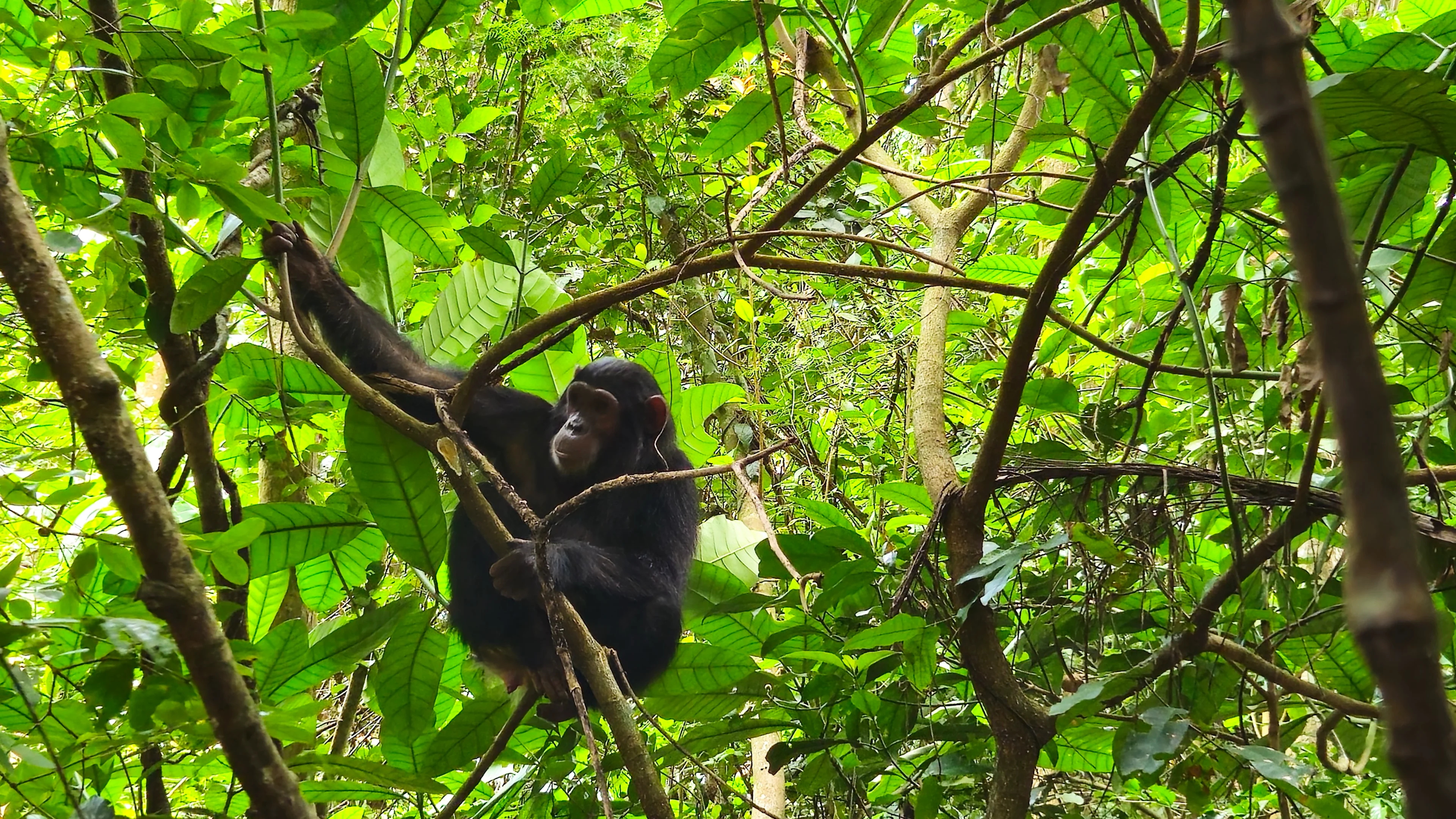
Mahale Mountains National Park lies 120 km south of Kigoma town, on a peninsula in Lake Tanganyika on the western border of Tanzania. The park has an area of 1613 sq km and is dominated by the Mahale Mountains Chain running from north-west to south-east across the middle of the park, the highest peak, Mount Nkungwe, rising 2,462 meters above sea level. Its western boundary protects not only 63 kms of lakeshore but also the adjacent 1.6 km-wide strip of coastal waters. The park vegetation is mainly Miombo woodland with narrow strips of riverine forests, some rain forest and savannah which provide habitat to a variety of animal species. About 82 species of mammals have been recorded in Mahale, a remote road-free park accessible only by boat or light aircraft. Mahale Mountains is home to some Africa’s last remaining wild chimpanzees, with an estimated population of about 800, found in the rain forests of Mahale. (Only 60 individuals forming what is known as "M group"), habituated to human visitors by a Japanese research project founded in the 1960s. Other rain forest animals including the Angolan colobus monkey and other primates.
Gombe Stream National Park
With an area of only 56 sq km, Gombe National Park is Tanzania’s smallest national park, but its famous primate inhabitants and its connection to Jane Goodall has given it worldwide renown. Many of Gombe’s 100-plus chimps are well habituated, and though it can be difficult, sweaty work traversing steep hills and valleys, if you head out early in the morning sightings are nearly guaranteed.
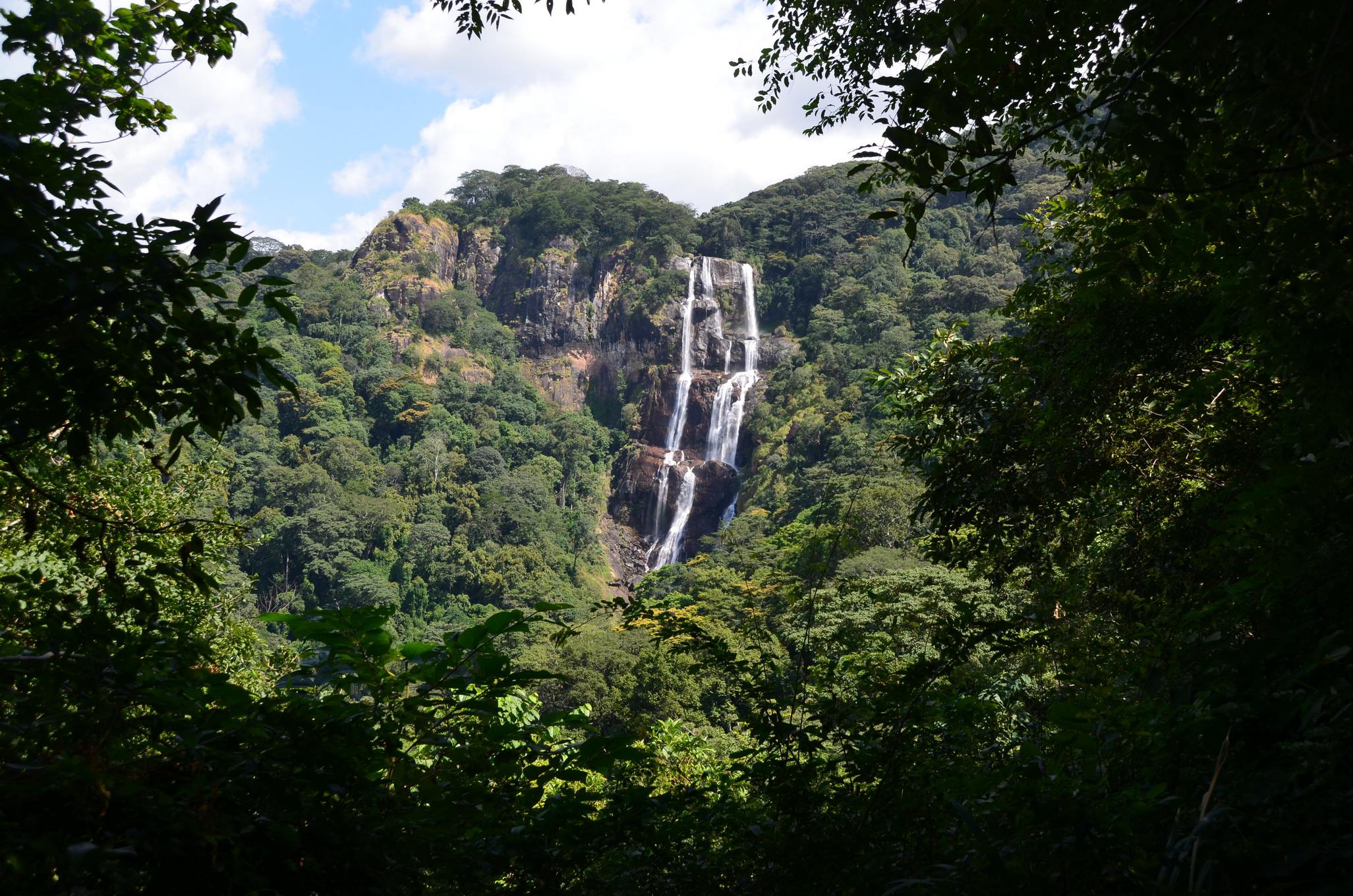
As well as chimp tracking, you can take walks along the lake shore, and go and see Jane’s old chimp-feeding station, the viewpoint on Jane’s Peak and Kakombe Waterfall.
Katavi National Park
Katavi National Park is the third National Park in Tanzania covering an area of 4471 sq km, Katavi National Park is located about 35km from Mpanda town in southwest Tanzania, to the east of Lake Tanganyika, lying within a truncated arm of the Great Rift Valley that terminates in the shallow expanse of Lake Rukwa. Katavi is famous for its undisturbed natural face compared to other parks in the country. The main vegetation of the park is Miombo woodland with scattered Acacia trees near Lake Chada. The main focus for game viewing within the park is the Katuma River and associated floodplains such as the seasonal Lakes Katavi and Chada. During the rainy season, these lush, marshy lakes are a haven for myriad waterbirds, and they also support Tanzania’s densest concentrations of hippo and crocodile. During the dry season, when the floodwaters retreat, that Katavi truly comes into its own. The Katuma, reduced to a shallow, muddy trickle, forms the only source of drinking water for miles around, and the flanking floodplains support game concentrations that defy belief.
Reserve Your Spot with Just $100
With Peaceful Expeditions, securing your place on a Kilimanjaro expedition is easy. A deposit of as little as US $100 per person locks in your adventure, with the remaining balance payable upon arrival in Tanzania.